
85 years ago – ‘Hurri bombers’ in the desert
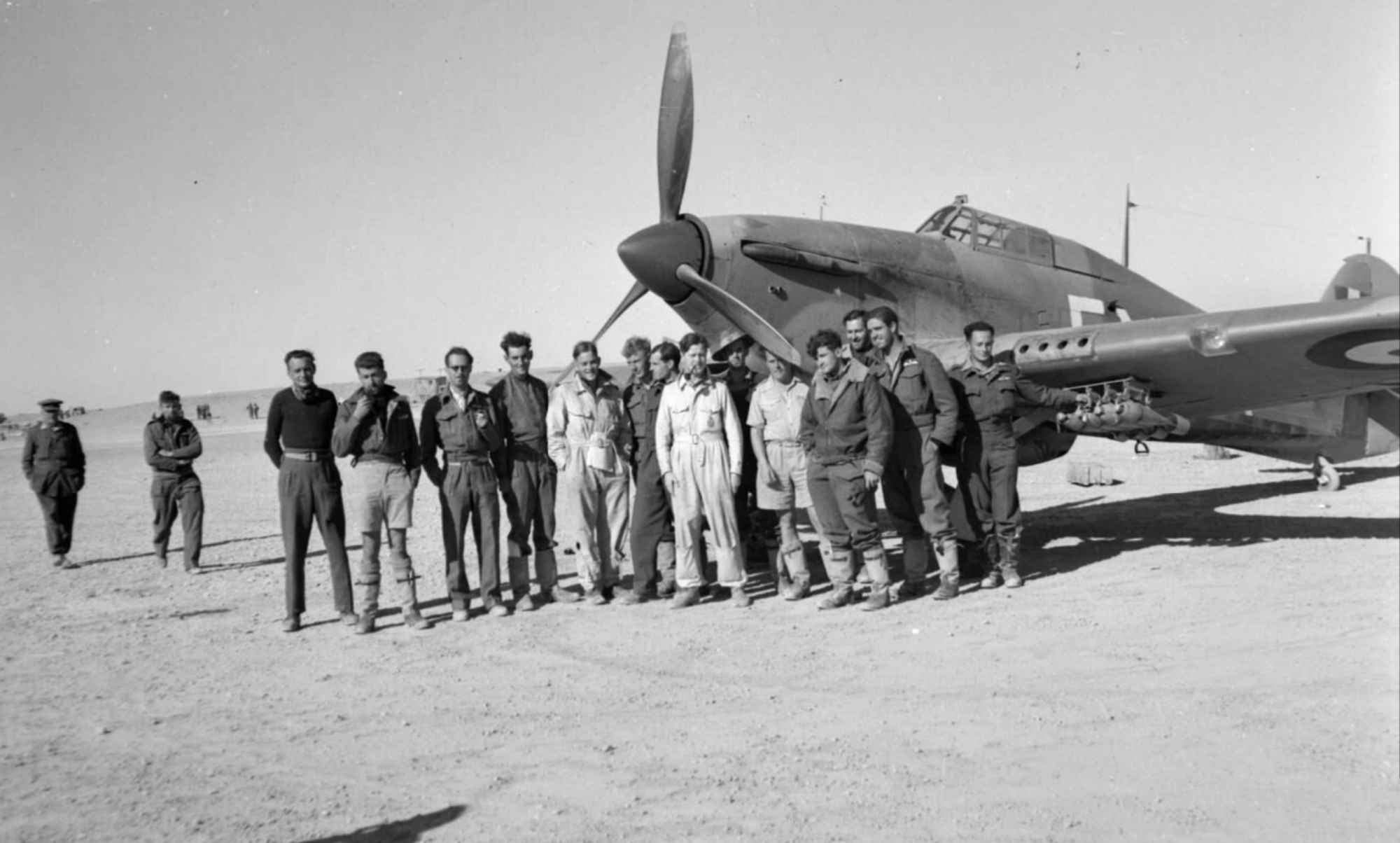
Header image: Pilots of 80 Squadron gather in front of one of their Hawker Hurricane Mk Is at a landing ground in the Western Desert, during Operation CRUSADER. In the middle of the group, wearing a white flying overall and smoking a pipe, is Squadron Leader M M ‘Mike’ Stephens, who commanded the Squadron from 1st November 1941, after the previous CO was shot down while strafing enemy positions. Stephens was also shot down in flames and wounded in both feet during an air engagement on 9th December. During Operation CRUSADER, 80 Squadron provided close support to the Army, their Hurricane fighters being fitted with bomb racks to carry four 40lb GP bombs, as seen here. Their first effective sorties as fighter-bombers were conducted against enemy vehicles south of Bir el Baheira on 20th November 1941.
Eighty-five years ago this month, on 18th November 1941, a major ground offensive, Operation CRUSADER, was launched by the British Eighth Army (with Commonwealth, Indian and Allied contingents) against the Axis forces (German and Italian) in the Western Desert of North Africa. It was intended to bypass Axis defences on the Egyptian/Libyan border, defeat the Axis armoured forces near Tobruk, raise the siege of Tobruk and re-occupy Cyrenaica. The attack surprised the Axis forces and led to several weeks of fierce fighting on land and in the air and proved a costly battle for both sides. The battle devolved into a chaotic series of mobile tank encounters across the open desert and British armoured brigades suffered severe losses against German anti-tank guns and Panzers. Despite tactical setbacks, persistent Allied pressure caused the Axis forces to run low on supplies and eventually forced the German commander, General Rommel, to pull his forces back to the Gazala line and to defensive positions near the Gulf of Sirte port of El Agheila.
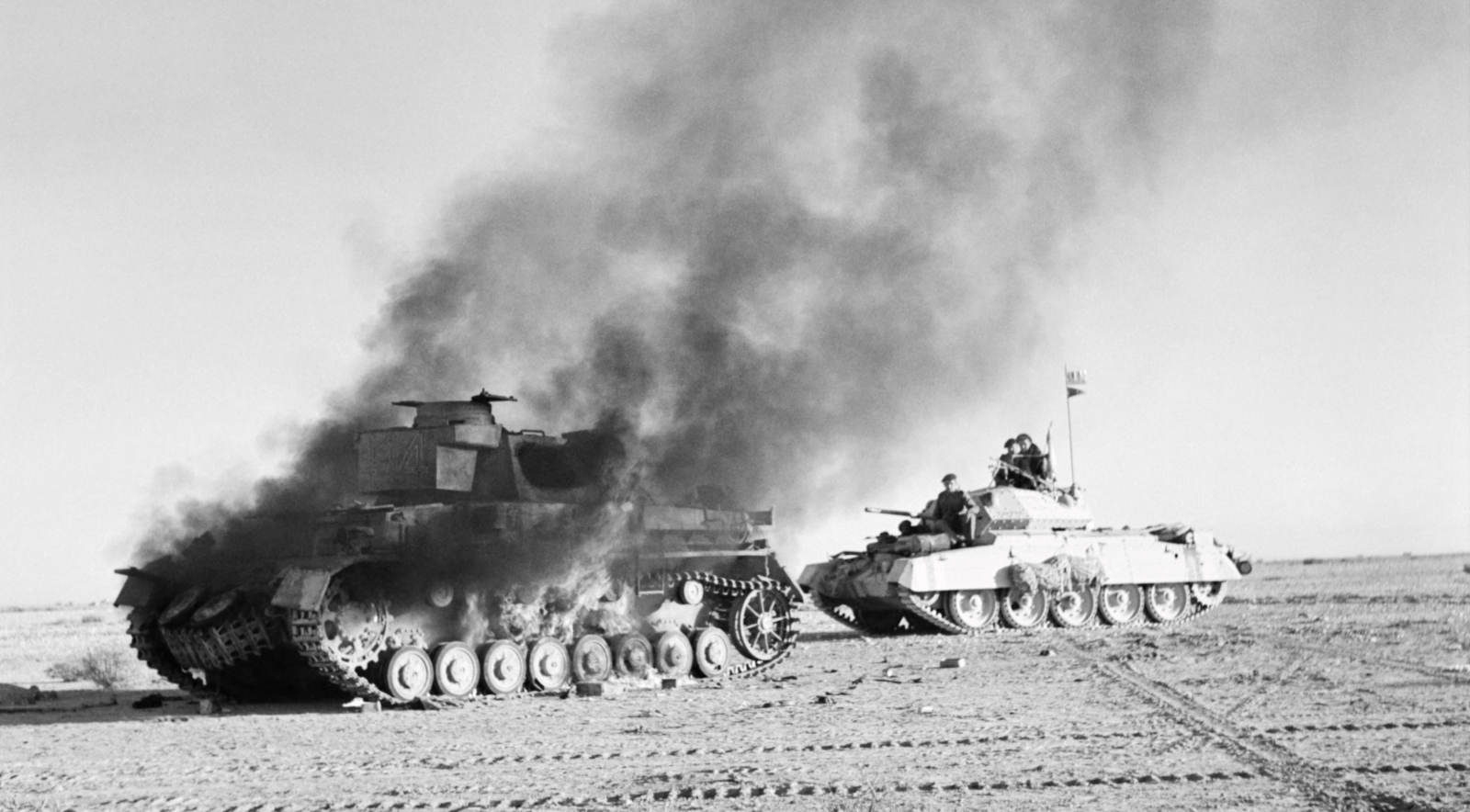
With Tobruk relieved, Operation CRUSADER was the first major victory over German forces in North Africa and was considered a success. However, by the end of the operation on 30th December 1941 the Allies had suffered some 17,700 casualties and lost 278 tanks and 300 aircraft; the Axis forces suffered around 38,300 casualties and lost 300 tanks and 600 aircraft. The ‘Desert Fox’ would not return for another six months, but then Rommel did take Tobruk, only to lose it again following the battle of attrition with General Montgomery at El Alamein, which took place less than a year after the CRUSADER battles of late 1941.
The air support for CRUSADER began nearly five weeks before ground forces attacked, with reconnaissance sorties, concerted raids on airfields, sea lines of communication and vehicle supply routes, as well as denying overflight by enemy reconnaissance aircraft. From 14th October to 17th November the RAF flew 3,000 sorties and did significant damage to Axis airfields and logistics. When the Eighth Army went forward on 18th November 1941, it did so with 20 fighter and 13 bomber squadrons in direct support, and with intensified attacks on airfields and supply convoys.
Operation CRUSADER saw the birth of integrated air support to ground troops and provided a testing ground for new procedures allowing the Desert Air Force to better support the Eighth Army. The RAF and Allied air forces supported land operations by establishing and maintaining air superiority throughout the battle, by isolating the battlefield through the targeting of communications, convoys and supply networks, and with direct close air support to forward troops, albeit with difficulty at times. Nearly 8,000 sorties were flown in direct support operations, and cooperation between the services was at last beginning to work well. The system was in its infancy and still imperfect, there were problems, but it proved the importance of combined-arms warfare. Subsequently, British air-ground cooperation in North Africa developed rapidly and ultimately this increasingly close cooperation allowed them to outfight the Axis forces.
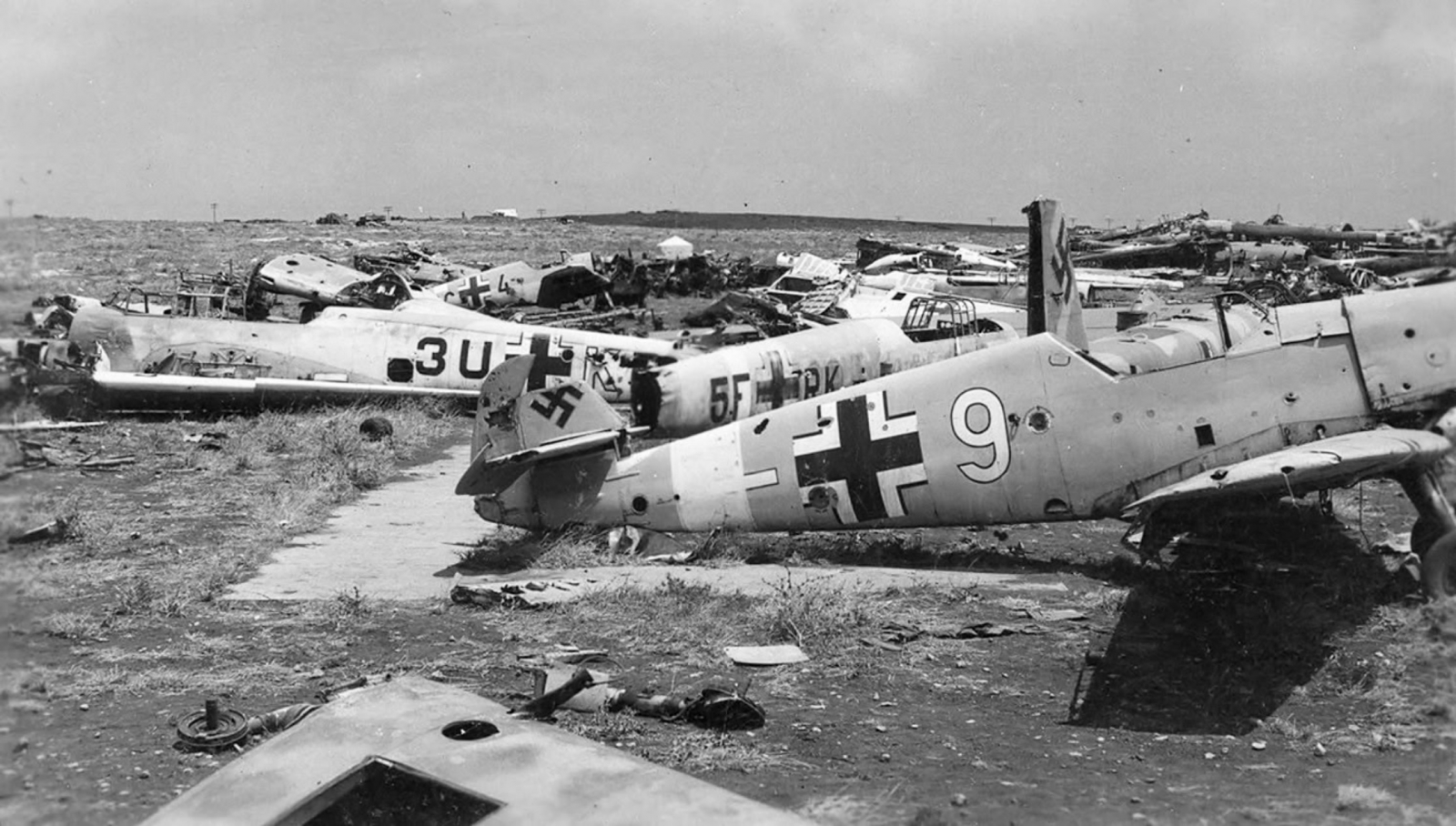
After the campaign had ended and territory previously held by the enemy was in Allied hands, the RAF’s handiwork quickly became clear. At Derna, Berka, and Benina airfields, the Allies found 172 Axis aircraft abandoned. Aircraft losses due to airfield raids and a shortage of spare parts proved disastrous for the Luftwaffe and Regia Aeronautica. Air Marshal Tedder, the AOC-in-C Middle East Command, visited Derna and Benina on 21st and 22nd January. He said, “Derna was an extraordinary sight, littered with aircraft, mostly Hun, in all stages of repair and disrepair! Some, obviously deliberately ‘demolished,’ others equally obviously knocked out by our bombing and low shoot-ups…Benina even more of a sight than Derna. Hun aircraft everywhere.”
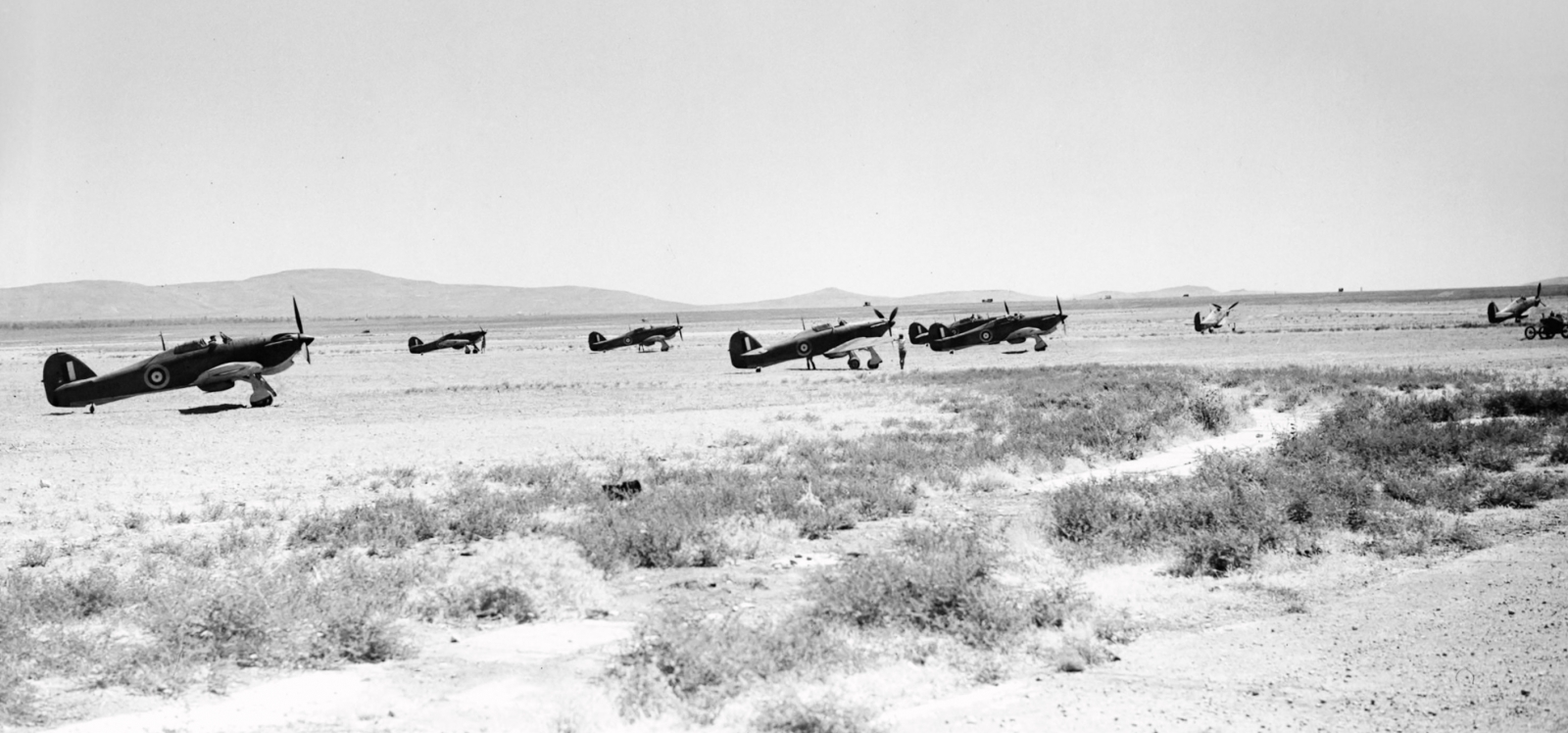
Among the RAF units involved in supporting the action on the ground during CRUSADER there was only one squadron of ‘Hurri bombers’, 80 Squadron, with Hurricane Mk Is modified with bomb racks under the wings to carry eight small 40lb bombs. By this point of the war the Hurricane was outclassed and struggled to compete with the most modern German fighter in theatre, the Bf 109F, and the Italian Mc 202. Unfortunately for the Hurricane pilots, both of these Axis types appeared in numbers in the desert during Operation CRUSADER. Apart from the threat from enemy fighters the low-level ground attack operations also exposed the Hurricanes to fierce anti-aircraft fire.
An official report on the second bombing sortie flown by the 80 Squadron Hurricanes during CRUSADER, on 21st November 1941, illustrates the nature of the work and the risks: “The squadron set off on a bombing and strafing sortie against a semi-permanent camp on the coastal road N.W. of Gambut. The bombing was much more accurate, and all bombs fell in the target area. Huts were seen to be wrecked. Pilots then strafed this camp and other tents in this area. The success of the sortie was completely marred by the fact that the Commanding Officer, Squadron Leader TM Horgan DFC, failed to return. His machine was hit by anti-aircraft fire; he was seen to belly land and then walk away from his machine. Hopes were held for his safety as British troops were supposed to be in the area where he crashed. Several other machines were damaged by light anti-aircraft fire of which much was encountered. Again, it must be repeated that ground strafing will be an expensive business.”
Squadron Leader Tom Horgan had taken command of 80 Squadron on 5th September 1941. He survived the crash landing in his Hurricane (Z4175) after being shot down by anti-aircraft fire on 21st November but was injured and briefly became a POW, being treated by doctors in a German field hospital until liberated by advancing Allied troops. He survived the war and eventually retired as a Group Captain with a DSO to add to his DFC.
LEST WE FORGET